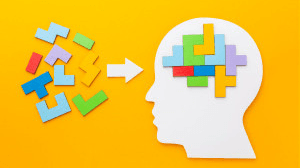
Understanding Cognitive Bias
Learn to identify cognitive biases and improve decision-making with practical strategies for clearer and rational thinking.
Cognitive biases are systematic patterns of thinking that can influence our decisions, judgments, and perceptions without us even realizing it. This course provides a comprehensive introduction to cognitive bias and helps learners understand how these mental shortcuts can lead to errors in reasoning and decision-making.
The course begins by explaining what cognitive biases are and why they exist. Learners will explore how the brain uses heuristics to process information quickly, often at the cost of accuracy. While these shortcuts can be helpful in certain situations, they can also result in flawed judgments and poor decisions.
You will examine common types of cognitive biases, such as confirmation bias, anchoring bias, availability bias, and overconfidence bias. The course provides real-life examples to show how these biases appear in everyday situations, including personal decisions, workplace environments, and social interactions.
This course also focuses on the impact of cognitive biases on problem-solving, communication, and critical thinking. Learners will gain insight into how biases can distort perception, reinforce stereotypes, and limit objective reasoning.
Practical strategies are introduced to help identify and reduce the influence of cognitive biases. Learners will explore techniques such as questioning assumptions, seeking diverse perspectives, slowing down decision-making, and using structured thinking approaches.
By the end of this course, learners will have a clear understanding of cognitive biases and how they affect decision-making. This course empowers individuals to think more critically, make better-informed choices, and develop stronger reasoning skills in both personal and professional contexts.