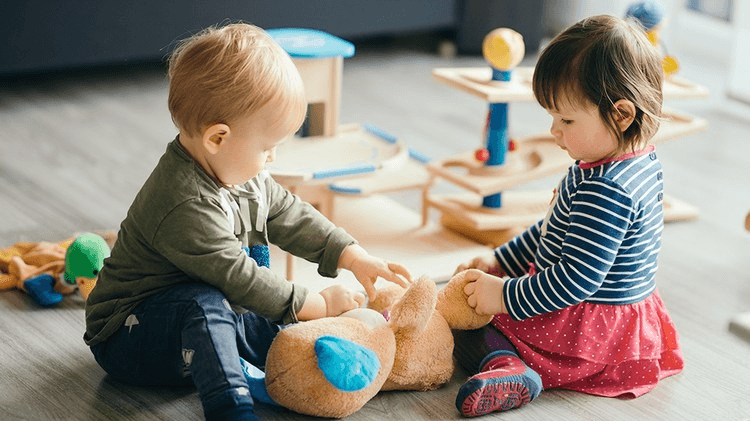
Physical Demands in Early Childhood
Explore the physical growth and motor skill development that shape children’s early years through active learning and play.
Growth
Growth is used for the physical characteristics of individuals and refers to the physical changes of the organism. In this respect, lengthening of the individual, increase in weight, and enlargement of the body are included in the concept of growth. Development and growth should not be confused. For example, a person's body grows and his mind develops.
Growth is the change in the physical structure of the individual in the quantitative dimension that occurs over time. Cell proliferation in the prenatal period and changes in the physical structure according to months or years after birth are the result of growth. Growth is age-related changes.
Maturation
Maturation is the biological changes seen in a living thing as a result of the interaction of the genetic structure of the individual with the environment. In short, it is the organism's growth to a level where it can do a job.
Unless an organism has reached sufficient maturity to achieve a certain behavior, it cannot learn that behavior or perform it properly. For example, unless the child's finger muscles reach the required level of maturity, we should teach him to hold a pencil with external influences. In order for the organism to perform some of the functions expected of it, it must reach a certain maturity. A child who has just learned to hold a pencil cannot be expected to write properly. No matter how many walking exercises we do before the child's muscle and bone structure is mature enough, the child cannot learn to walk. Maturation is quite independent of environmental factors. The influence of the environment does not affect maturation under normal conditions. Children learn to walk when stimulus deprivation is not intense in environmental conditions. Human biological equipment is programmed for walking behavior.
Who this course is for:
- Educators
- Child Development Experts
- Psychologist
- Preschool Theachers
- Students
- Parents
- Mothers
- Fathers