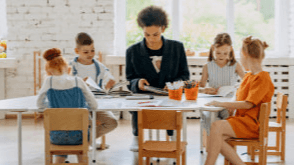
Preschool Education: The Reggio Emilia Approach
Explore child-centered, inquiry-based preschool learning through the Reggio Emilia Approach, focusing on creativity, Env.
Early childhood is a remarkably powerful stage of development. The way children learn, explore, play, and communicate during this period shapes their confidence, identity, and curiosity for years to come. The Reggio Emilia Approach is one of the most respected and influential early childhood educational philosophies worldwide. Developed in Reggio Emilia, Italy, it emphasizes creativity, child-led learning, collaboration, and the environment as a key influence in children’s development. This course explores the foundations and classroom practices of the Reggio Emilia Approach, offering practical strategies for teachers, parents, and caregivers.
Origins and Philosophy
The Reggio Emilia Approach was developed after World War II by educator Loris Malaguzzi and the families of the Reggio Emilia community. They believed that education should empower children and encourage them to think independently, solve problems, communicate, and build relationships. At its core, the philosophy views children as capable, curious, competent individuals who construct knowledge through experiences.
Rather than simply receiving information, children actively question, explore, discuss, and experiment. Learning is seen as a collaborative and creative journey.
The Image of the Child
Central to this approach is the belief that children are not empty vessels to be filled with knowledge. Instead, they are naturally rich in potential, intelligence, and creativity. Children express their understanding in many forms—through speech, drawing, movement, storytelling, building, music, and play. This is known as the “Hundred Languages of Children.”
Teachers in Reggio Emilia environments respect children’s thinking. They observe, listen, and respond to their interests, guiding learning without controlling it.
The Environment as the “Third Teacher”
One of the most recognizable features of Reggio Emilia preschools is the thoughtfully arranged learning environment. Classrooms are welcoming, aesthetically beautiful, and organized to inspire curiosity. Natural light, open spaces, art materials, mirrors, plants, and meaningful objects are commonly used.